
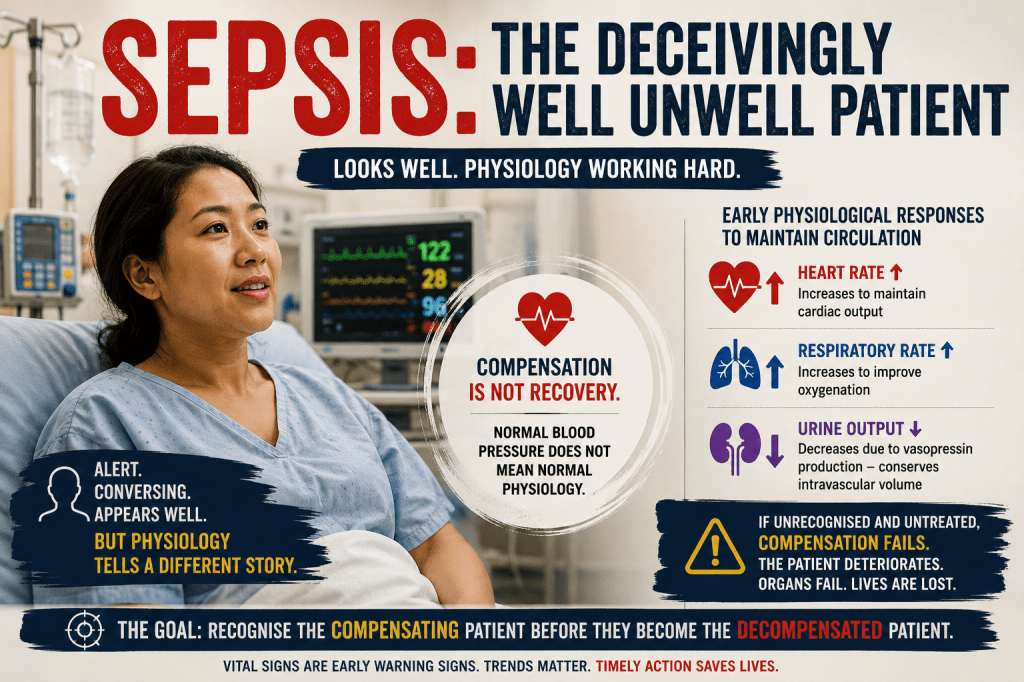
Sepsis Mini Series: The Deceptively Well Patient
This article is the first in a short mini-series on recognising the deteriorating patient through physiology.
The human body is equipped with remarkable physiological responses when it is at risk of circulatory compromise. The primary objective of these survival mechanisms is to maintain circulation, and therefore oxygen delivery, to vital organs such as the brain and heart.
This is achieved by maintaining cardiac output and arterial perfusion.
Cardiac output is determined by two factors: heart rate and stroke volume. Arterial perfusion is maintained through a complex interplay of baroreceptor responses, vasoconstriction, and hormone production, including vasopressin.
Although this article focuses on sepsis, the principles of physiological compensation discussed here also apply to other conditions associated with circulatory compromise, such as haemorrhage, dehydration, and trauma.
At this compensatory stage, the patient is often alert, able to converse normally, and may appear generally well. In fact, they can be deceptively reassuring.
However, the measurable physiological parameters tell a different story.
To maintain circulation, the body begins to make physiological adjustments:
- The heart rate increases to maintain cardiac output.
- The respiratory rate increases to improve oxygen delivery and meet metabolic demand.
- Urine output decreases as vasopressin and other compensatory mechanisms conserve intravascular volume.
These are not signs of health. They are signs that the body is working harder to maintain normal physiology.
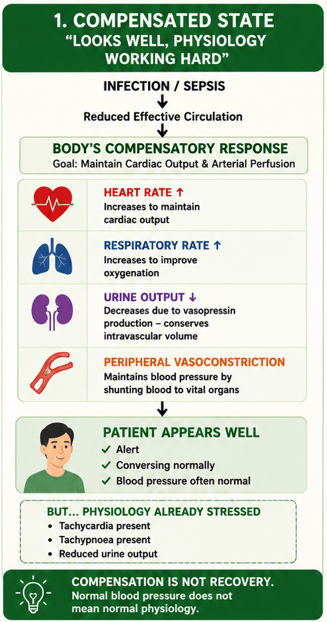
A common example is the postpartum patient with endometritis. Despite appearing comfortable, alert, and normotensive, she may develop persistent tachycardia, increasing respiratory rate, and reduced urine output. These physiological changes may precede obvious clinical deterioration by several hours.
If the underlying problem is not recognised and addressed, these compensatory mechanisms will eventually become exhausted. At some point, the body can no longer maintain adequate cardiac output or blood pressure.
This is known as the decompensated stage.
At this stage, the patient may develop:
- Reduced level of consciousness
- Hypotension
- Poor peripheral perfusion
As deterioration progresses, multiple organ systems begin to fail, potentially resulting in respiratory failure, cardiovascular collapse, and cardiac arrest.
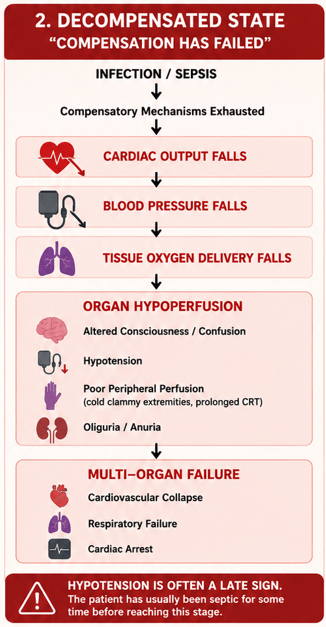
The challenge is that we cannot accurately predict when a patient will transition from compensation to decompensation.
The timing varies considerably between individuals and is influenced by factors such as age, comorbidities, physiological reserve, and the underlying disease process.
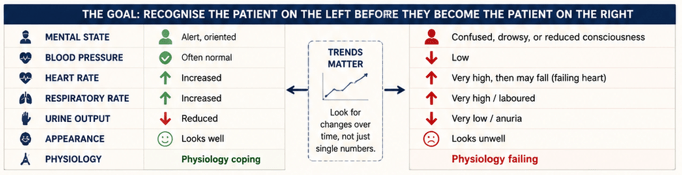
This is why clinicians must pay close attention to measurable physiological parameters, particularly the vital signs, and be able to explain why they are changing.
Equally important is recognising trends.
A single mildly abnormal observation may be insignificant. A rising heart rate, increasing respiratory rate, or falling urine output over time may be the earliest warning that the patient’s physiological reserve is being consumed.
Only by recognising the compensatory stage can we avoid the common mistake of mistaking a physiologically stressed patient for a healthy, well-looking patient.
Final Takeaway
The absence of hypotension does not mean the absence of serious illness.
A patient may look well because their physiology is compensating. The vital signs often reveal the truth long before the clinical appearance does.
Next in this Mini-Series
Understanding physiology is only the first step.
In the next article, we will move from understanding the physiology of sepsis to recognising sepsis in clinical practice. We will discuss how to identify patients with suspected sepsis and introduce the Sepsis Bundle, one of the most important early life-saving interventions available to clinicians.
Early recognition and timely intervention remain the cornerstone of improving outcomes in patients with sepsis.
Continue the Conversation
This series aims to support practical refinements in everyday clinical practice across hospitals, health clinics, and MCHCs.
Future topic suggestions, feedback, and clinical questions are welcome.
Written by
Dr Nurulhuda Samsudin
Obstetrician & Gynaecologist
Sarawak General Hospital
 Department of Obstetrics & Gynaecology, Sarawak General Hospital
Leave a comment